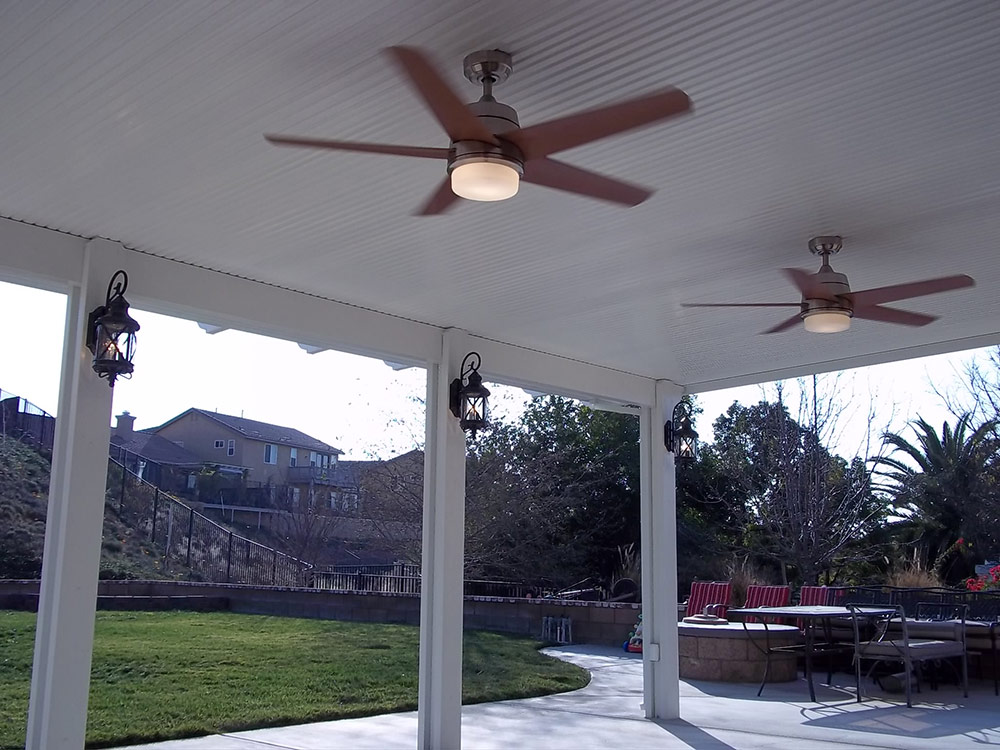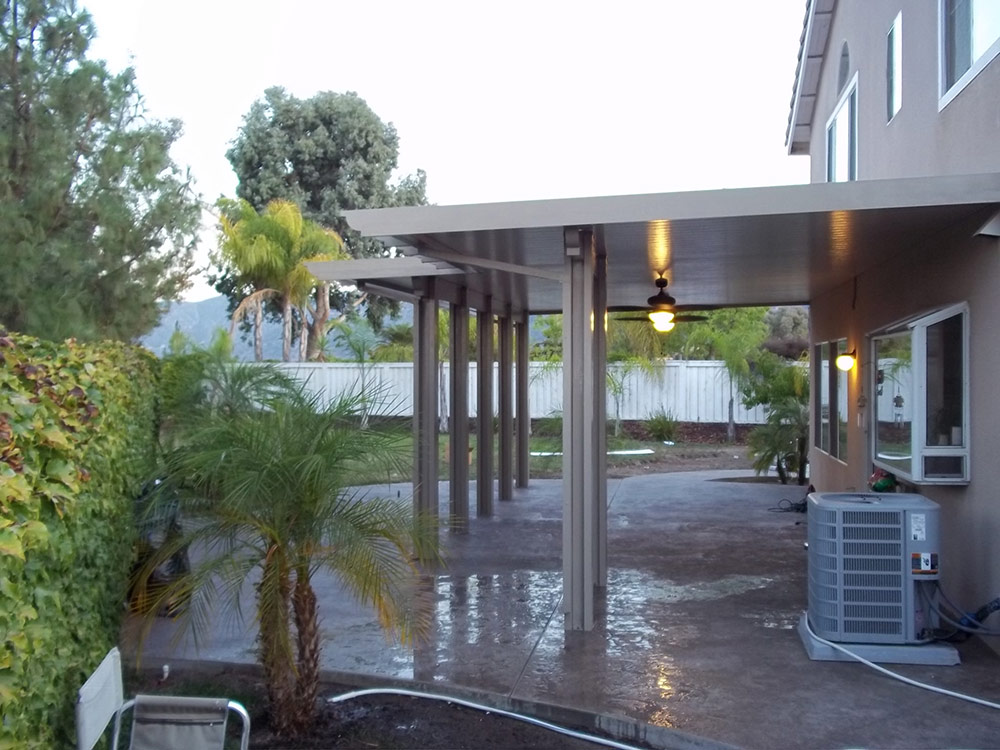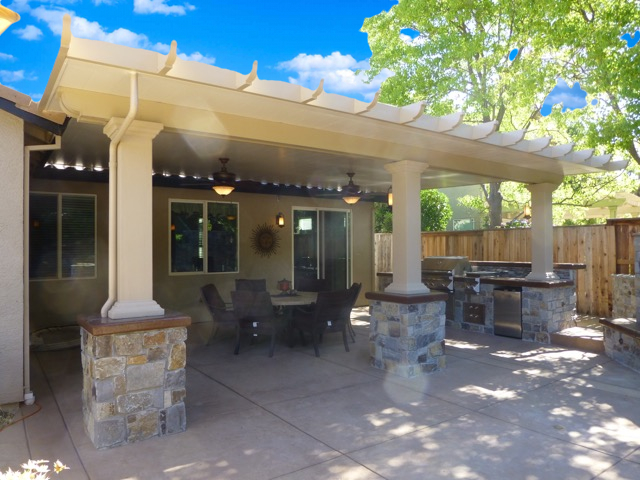
Wood Patio Covers
Duralum has manufactured patio covers in the United States since 1961, with factories in Sacramento, Corona, Las Vegas, and Dallas.
A wood patio cover is an outdoor structure made from lumber that provides shade and weather protection for a patio. With regular re-sealing every three to six years, most last 10 to 20 years. Note: Duralum does not manufacture real wood covers — the Weatherwood® line delivers the same aesthetic using powder-coated aluminum with DuraTough Coating™, eliminating the staining, rot, and termite issues that come with real lumber.
Below is a look at how wood covers hold up over time, where they commonly fail, and how they compare to modern wood-look aluminum.
How Much Does One Cost?
Cost depends on the lumber species, structural complexity, and whether the build is open lattice or solid roof. Solid covers run significantly more than open lattice or pergola-style builds. Labor, engineering, permit fees, and finish materials add to the total, and these vary by region and jurisdiction.
What drives the cost
- Wood type and grade (cedar, redwood, and pressure-treated pine carry different price points)
- Open lattice or pergola vs. solid closed-roof design
- Custom details like decorative rafter ends, beam shaping, or ceiling treatments
Beyond materials, most permitted builds require engineering documentation and approved blueprints. Labor and permit fees vary by city and county, your Duralum dealer can walk you through what local requirements apply.
Custom architectural details, decorative beam shapes, rafter ends, and detailed ceiling treatments, add meaningfully to the base cost.
Maintenance and Lifespan
A wood cover needs ongoing maintenance, or it won’t reach its expected lifespan. Most owners re-seal or re-stain every three to six years. Skip this and you’ll see moisture damage, fading, and warping take hold.
Each sealing treatment adds up, materials, labor, and any prep work on a mid-size cover can easily run into the hundreds of dollars. When spread across the years between treatments, the cumulative maintenance cost is a real factor in the total cost of ownership.
Maintained well, a quality wood cover lasts 10 to 20 years. Skip the maintenance and the timeline drops fast. Untreated lumber in direct sun and weather can start showing rot or insect damage within a few years.
Common Failure Points
A few patterns show up consistently in wood cover replacement work:
Water intrusion at fasteners and joints
Sealants degrade within 3 to 6 years. Once moisture gets in, repair becomes structural.
Termite and carpenter ant damage
Untreated softwoods are vulnerable, especially along coastal California and in the humid parts of Texas.
Warping, cupping, and cracking in dry, hot climates
Phoenix, Las Vegas, and inland Southern California see this often.
Mildew and rot in humid, shaded environments
Once rot reaches load-bearing members, the cover stops being safe.
Fading from UV exposure
High-sun regions see the first signs within two years of installation.
Wood vs. Aluminum: A Detailed Comparison
| Factor | Wood Patio Cover | Wood-Look Aluminum |
| Installed cost (per sq ft) | Higher installed cost; varies by wood species, design, and region | Competitive installed cost; contact a Duralum dealer for a quote |
| Routine maintenance | Re-stain or re-seal every 3 to 6 years | Occasional rinse with mild soap |
| Annual maintenance cost | Recurring every 3–6 years; adds up significantly over time | Effectively zero |
| Warranty | Varies by builder, typically short | Backed by transferable lifetime warranty |
| Termite resistance | Vulnerable | Immune |
| Rot resistance | Vulnerable in humid climates | Immune |
| Warping and cracking | Common in extreme heat or cold | None |
| Fade resistance | Stains and finishes degrade in UV | Powder-coated, fade-resistant |
| Permitting complexity | Higher; often custom engineering | Pre-engineered, certified for all U.S. jurisdictions |
| Wildfire zone compliance | Often requires additional treatment or specific materials | Aluminum is non-combustible |
| Appearance | Natural wood grain | Powder-coated finish with the rich look of real wood |
Why Many Homeowners Switch to Aluminum
Many homeowners installing aluminum are doing it as a replacement, swapping out a wood cover that’s reached the end of its life. The reasons are usually practical, not aesthetic.
Add up 10 to 15 years of stains, sealants, and repairs, and the total often matches or exceeds what the wood cover cost to install. Termite damage or rot can also make a cover unsafe well before that point. Most homeowners switching at replacement time are looking to drop the maintenance schedule entirely, and the lifetime warranty that follows the home if it sells is a real selling point.
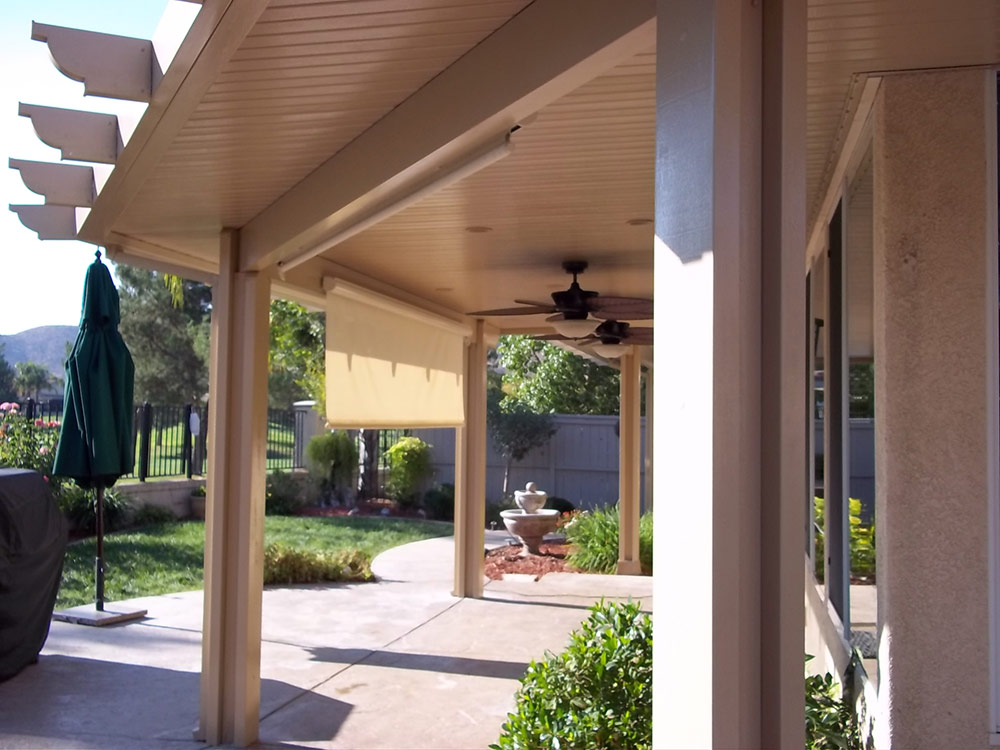
Wood-look aluminum solves the one thing that used to push buyers toward real wood, which is the aesthetic. Wood-grain finishes and rafter-tail detailing get you the look of stained cedar or painted pine without any of the upkeep.
Duralum's Aluminum Alternative
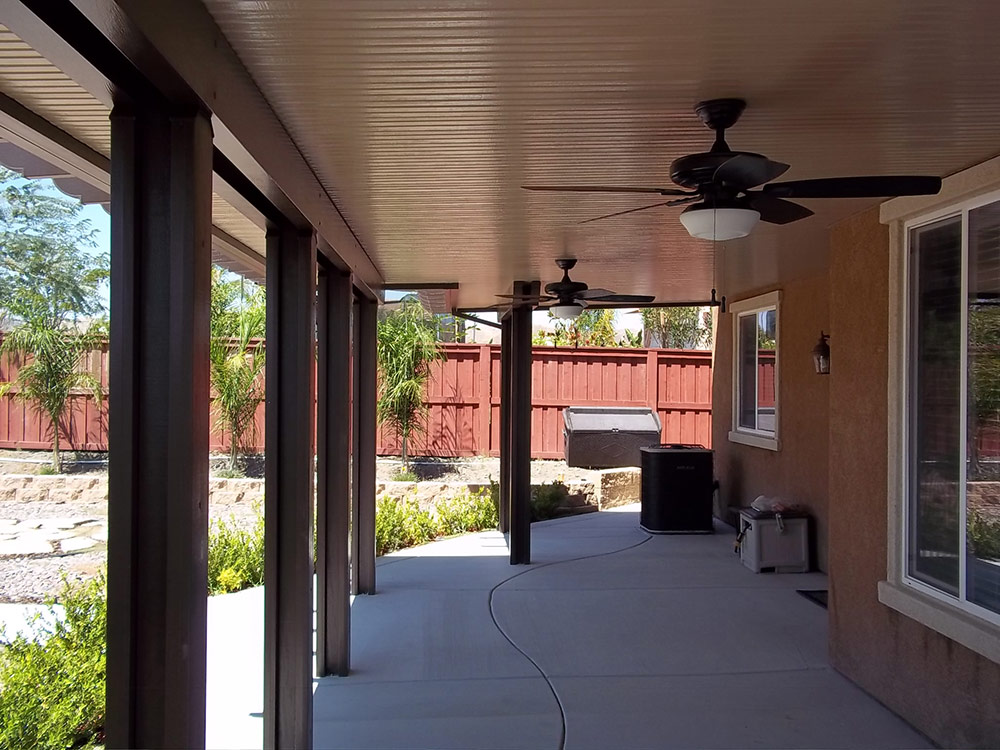
The Weatherwood line replicates the look of natural wood using powder-coated aluminum. Every cover is built from nationwide-certified engineering documentation that meets or exceeds local building codes.
Three configurations cover most residential applications.
Phoenix Lattice
The Phoenix Lattice patio cover is an open-style design with rafters that filter light and allow airflow, replacing the look of wood lattice and pergola structures.
Californian Solid
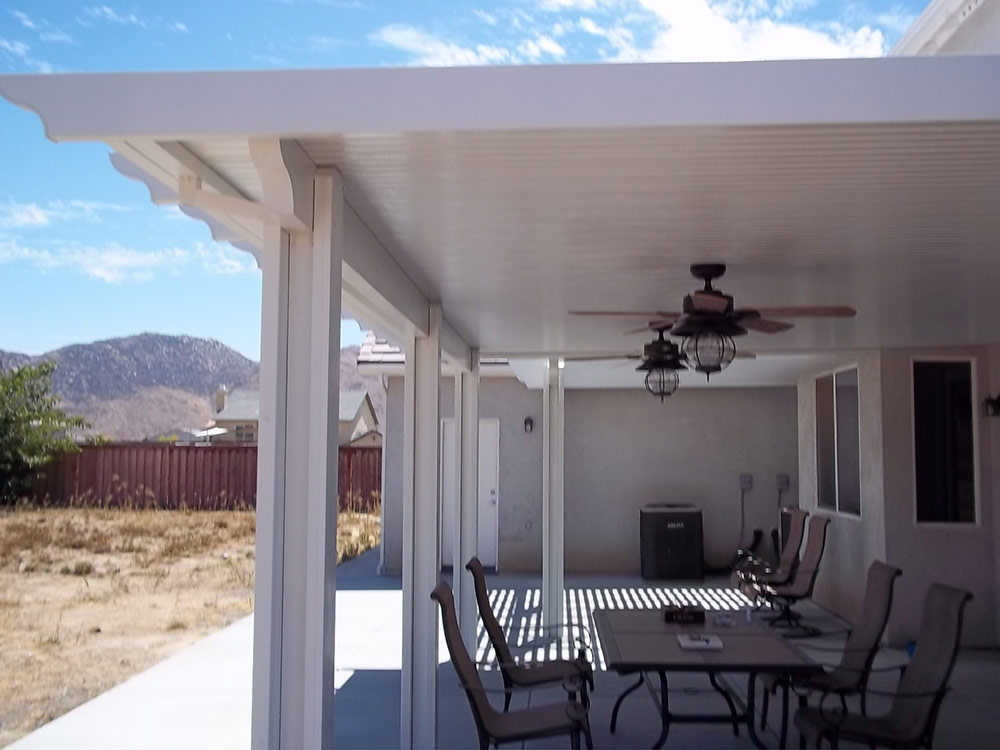
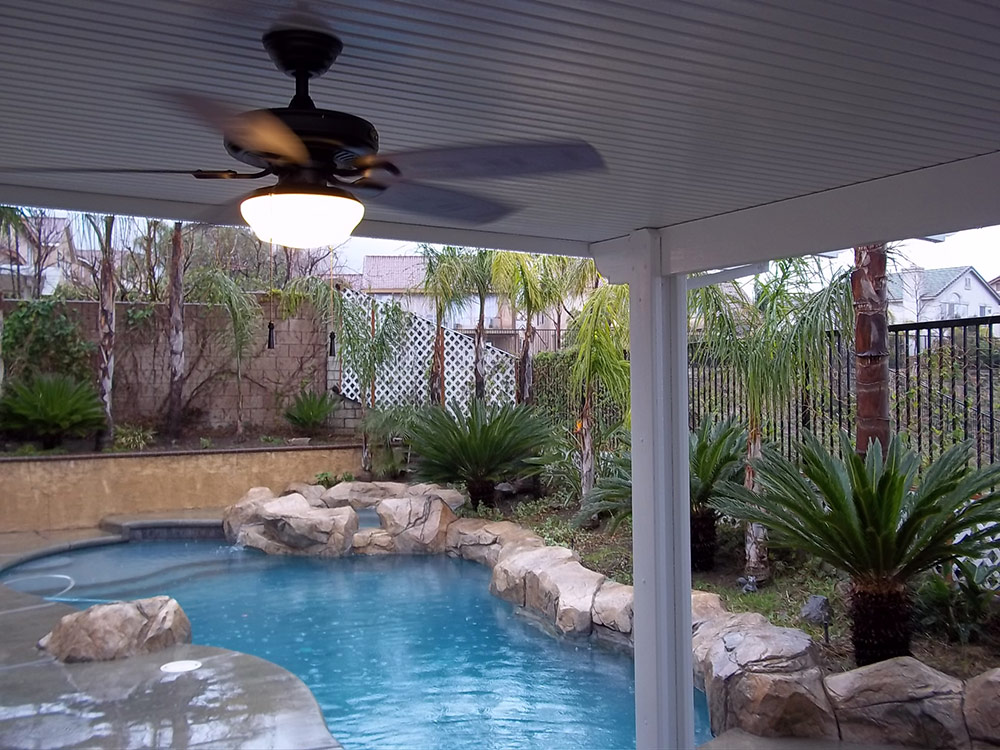
The Californian Solid patio cover delivers full shade and rain protection with a closed-roof design, built to replace solid wood patio roofs without the maintenance.
Monterey Insulated
The Monterey Insulated patio cover adds thermal core panels that reduce heat transfer and outside noise. It’s built to keep your patio cooler, quieter, and better protected year-round.
Installation is handled through a network of certified dealers, with manufacturing in Sacramento, Corona, Las Vegas, and Dallas.
For homeowners looking for a clean, contemporary aesthetic, the Smooth Modern finish pairs flat-panel or insulated roof decking in Smooth White with posts, beams, and lattice in Smooth Ebony, Slate, or White, a popular choice for upscale homes.
Frequently Asked Questions
Does Duralum sell wood patio covers?
No. Duralum manufactures aluminum patio covers built to look like wood. The Weatherwood® line uses powder-coated aluminum with the rich look of real wood and traditional rafter-tail profiles to replicate stained or painted wood. This removes the staining, sealing, rot, and termite issues that come with real lumber while keeping the wood-like aesthetic.
How long do wood patio covers last?
Climate is the biggest factor. Most wood covers last 10 to 20 years with consistent maintenance. In hot, dry regions you can expect less than that, even with diligent upkeep. Humid coastal areas with termite activity push the timeline shorter.
Can a wood patio cover be replaced with aluminum?
Yes. Aluminum patio covers can go in place of an existing wood structure as long as the foundation, attachment points, and clearances meet the new cover’s specifications. Replacements need a permit and a site assessment by a certified installer. Pre-engineered aluminum systems usually move through permitting faster than custom wood builds.
What is the cheapest type of patio cover?
At the entry level, open lattice or pergola-style wood covers are typically the least expensive to build. However, once you factor in labor, permits, finish materials, and the ongoing maintenance cycle of staining and sealing, aluminum lattice systems often win on total cost of ownership over 10 years, with zero maintenance required.
Get a Quote on a Wood-Look Patio Cover
Duralum’s certified dealers handle the whole project from design through permitting and installation. Request a free, no-pressure quote to see what wood-look aluminum could look like on your patio.